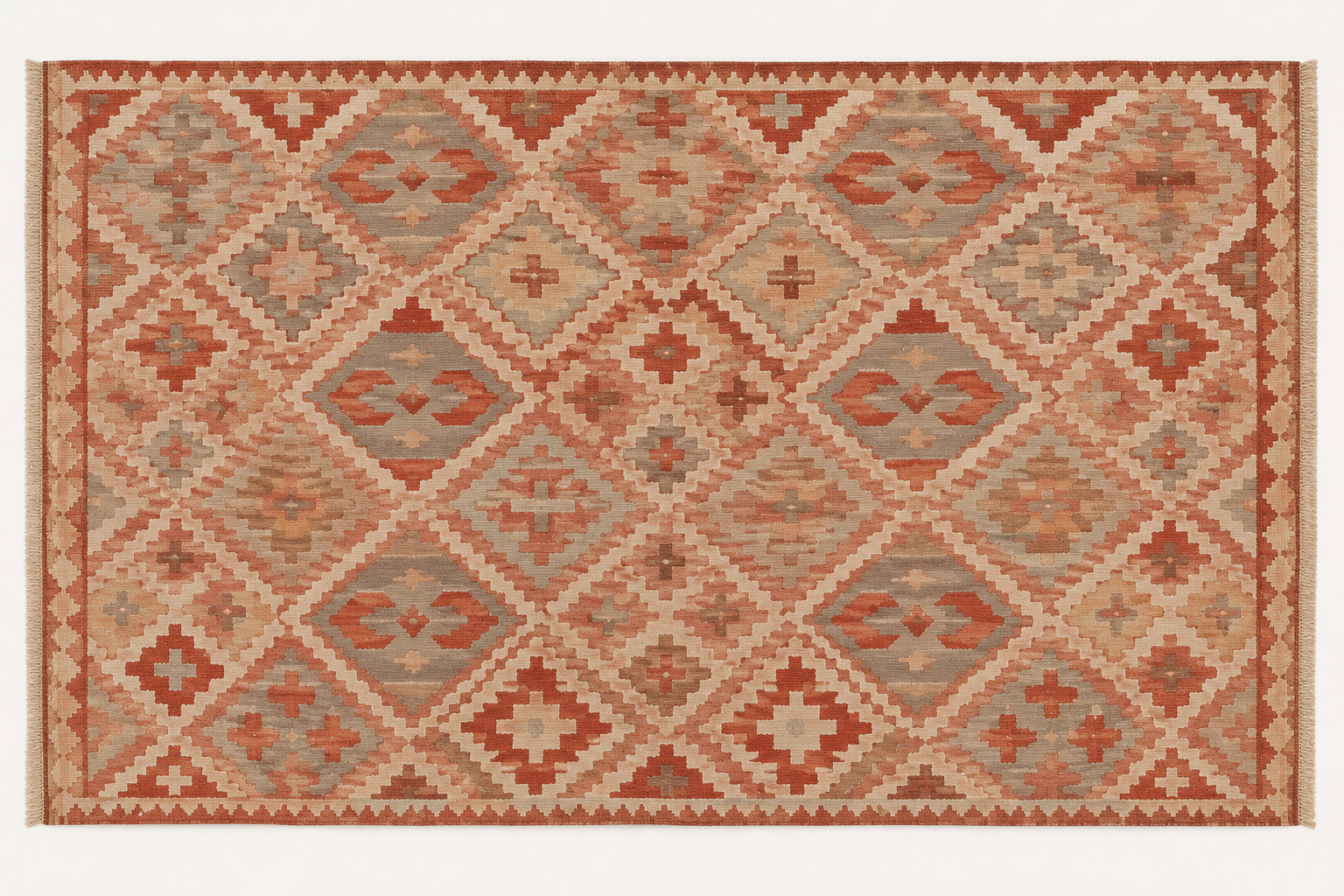
Rugs
Handwoven rugs that bring colour, texture and a considered sense of composition to the rooms they inhabit.
Kirsanov rugs bring together the bold compositions of European and Brazilian modernism, the restrained geometry of architectural design and the rich tradition of Indian hand-weaving. Some are graphic and asymmetric; others are deliberately spare, textural or drawn from older flatweave traditions. Across the collection, the intention is the same: to make rugs with individual character that sit comfortably among furniture of very different periods.
We tend towards open compositions rather than ornamental enclosure. Kirsanov furniture can be substantial, richly figured and historically referential; placing it upon an equally formal carpet risks tipping an eclectic interior into pastiche. Many of our designs therefore allow pattern to travel freely to the edges. Others, such as The Border and Architectural Border, use a border as part of the architecture of the rug itself: a clear line, a measured rhythm, a little order around a quiet centre. The distinction is one of intention, not a prohibition. What matters is that the rug supports the room without competing with the furniture it carries.
Working principally in wool, the palette moves between rich, mature colours — madder red, burnt sienna, tobacco, old gold and indigo — and quieter tones of parchment, oatmeal, olive and charcoal. The rugs are intended to connect furniture from different periods rather than dictate a particular style of room. We embrace the subtle variations of handmade work: a wandering line, imperfect geometry or slight change in colour. These are not imperfections to disguise, but part of the character of the object.
A Kirsanov rug should be difficult to place precisely in either geography or time: modern but not fashionable, luxurious without being precious, and a quiet counterpoint to the weight and character of the furniture it carries.
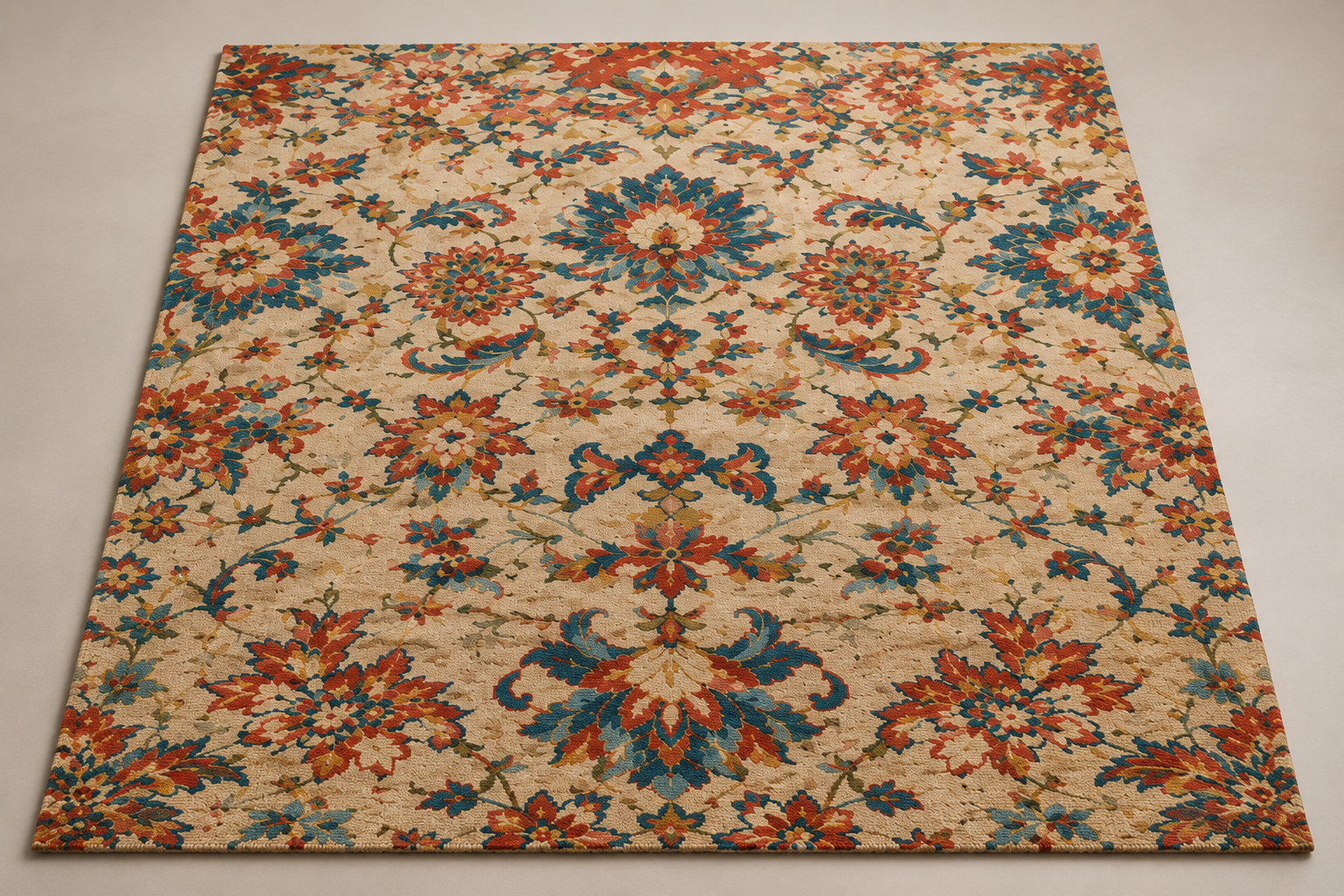
Floral
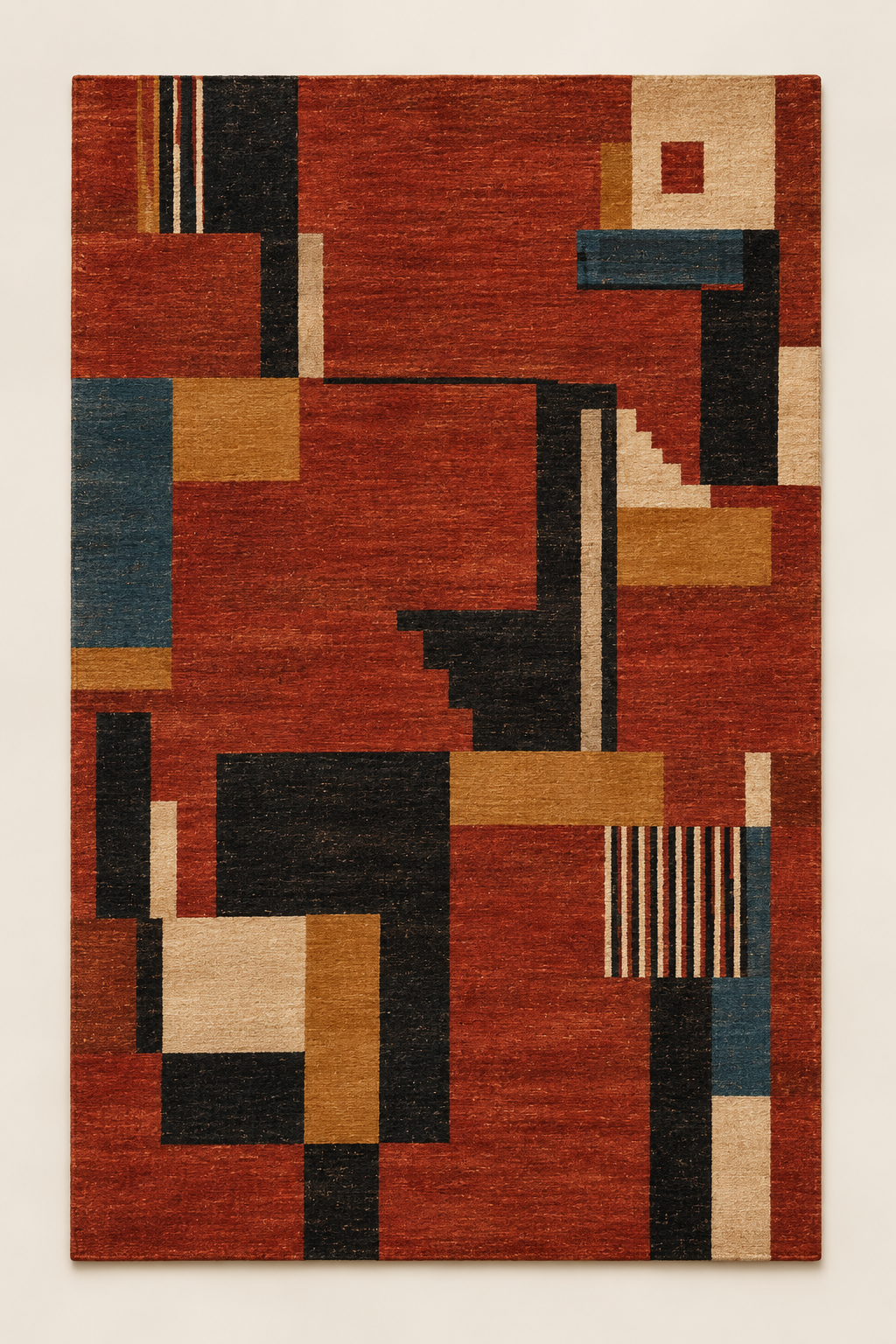
Structure In Colour
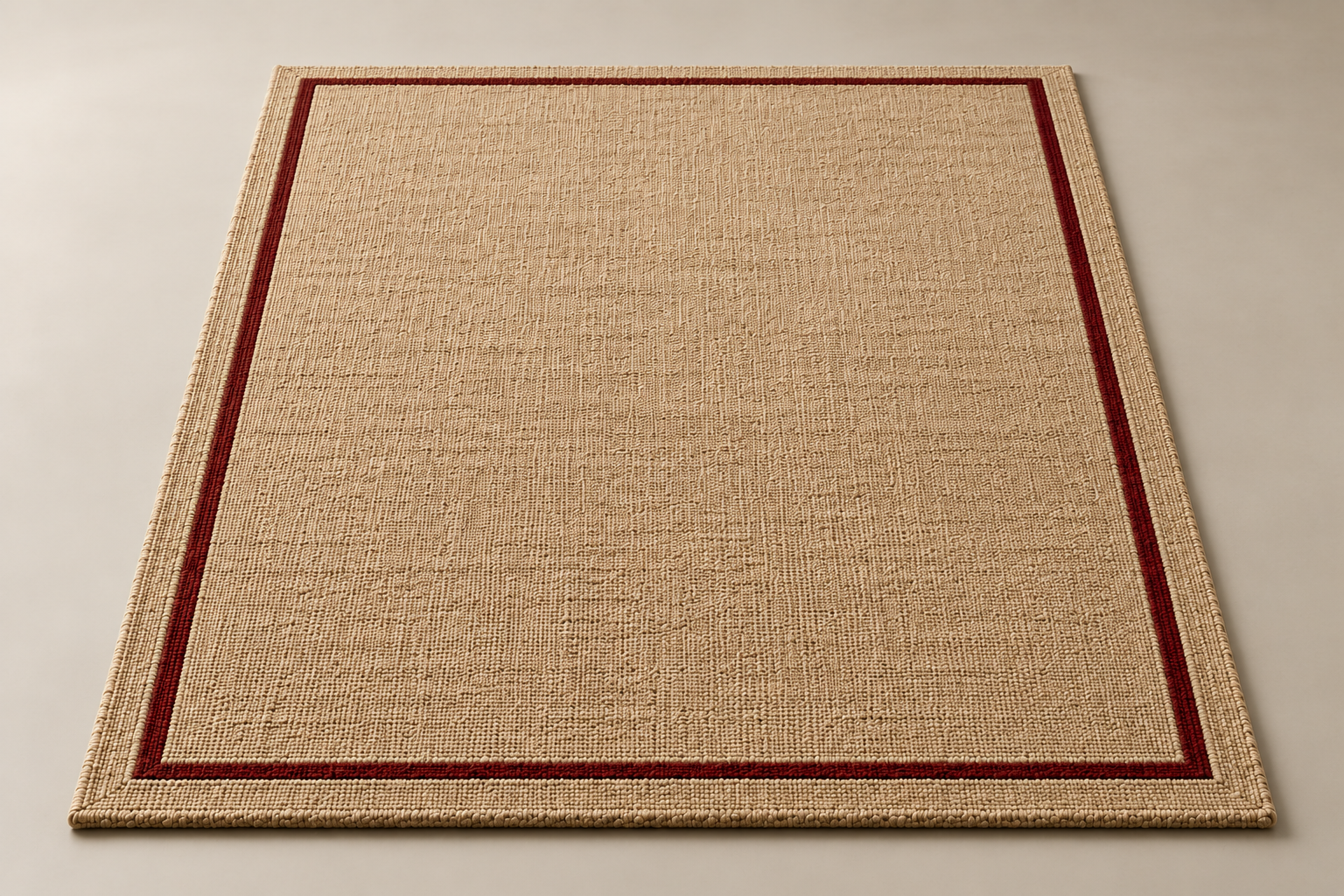
The Border
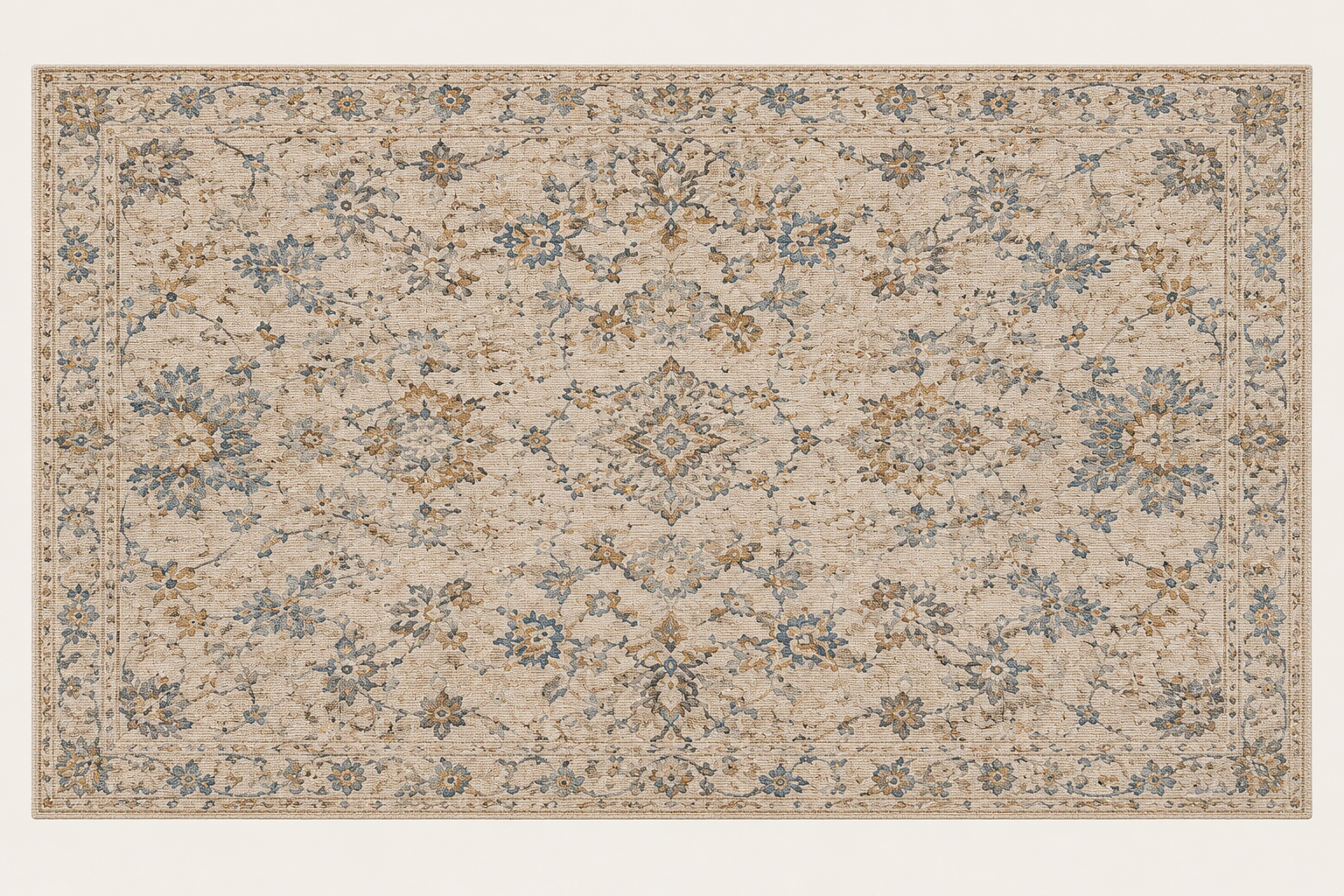
Ghost
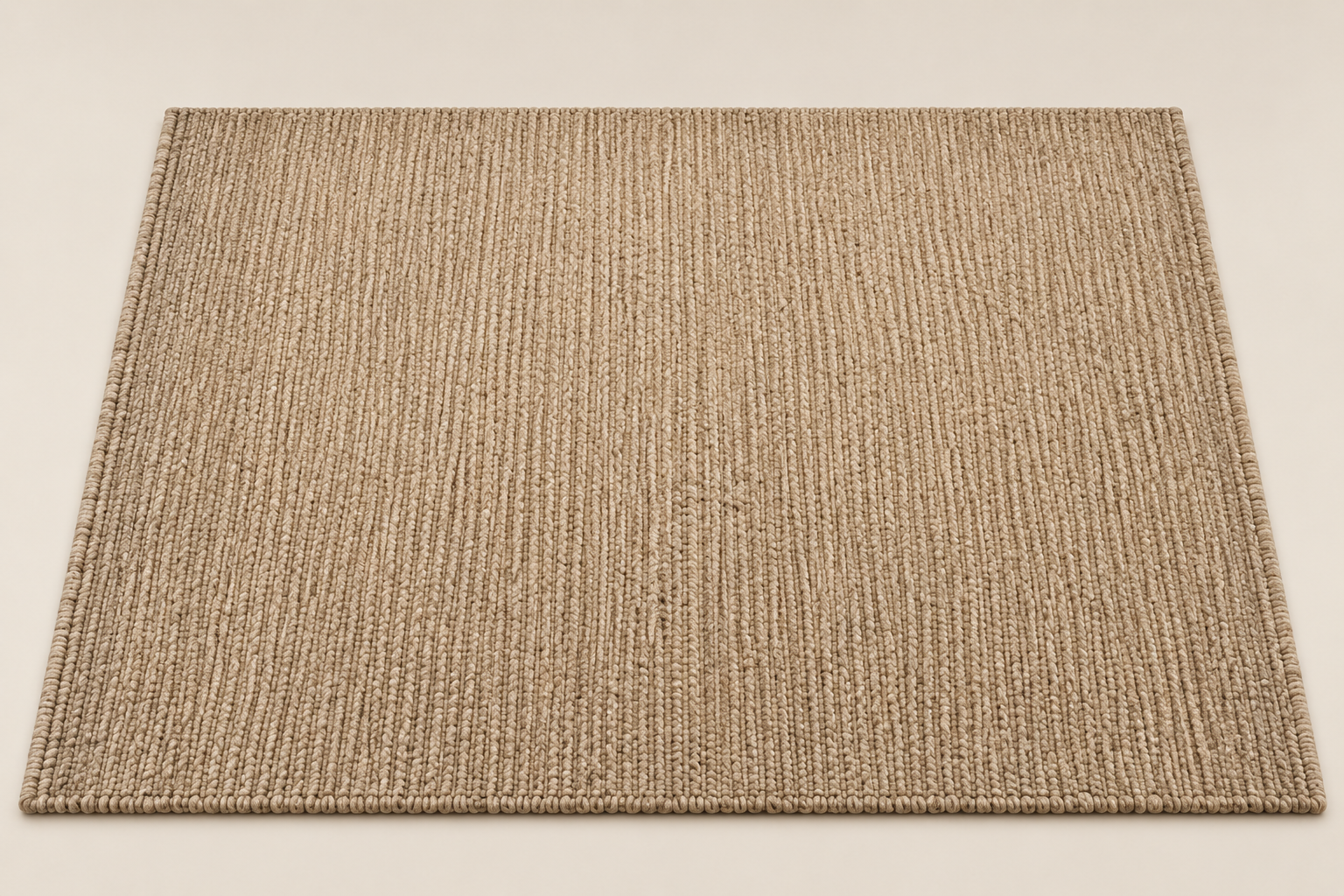
The Plain
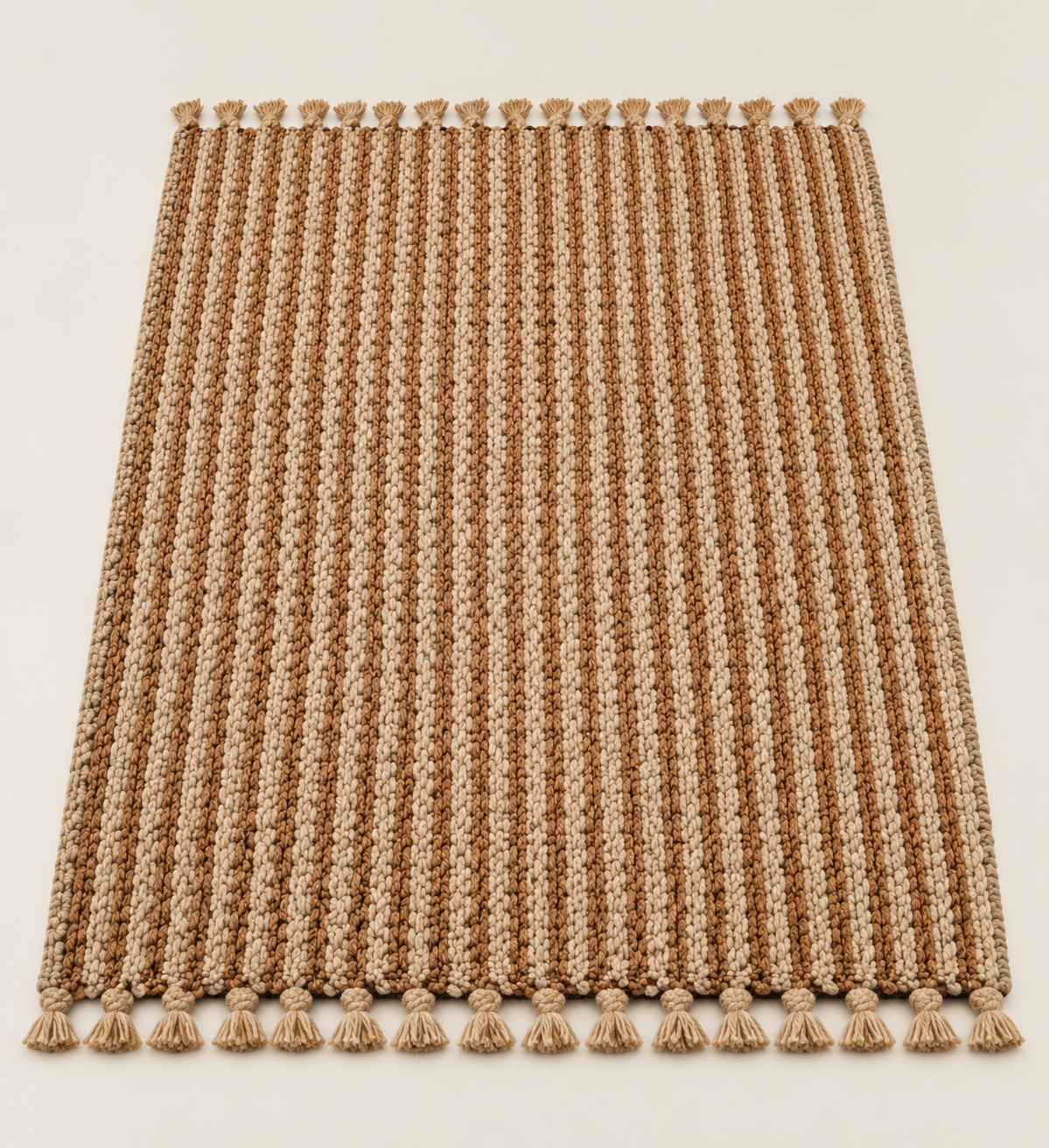
The Stripe
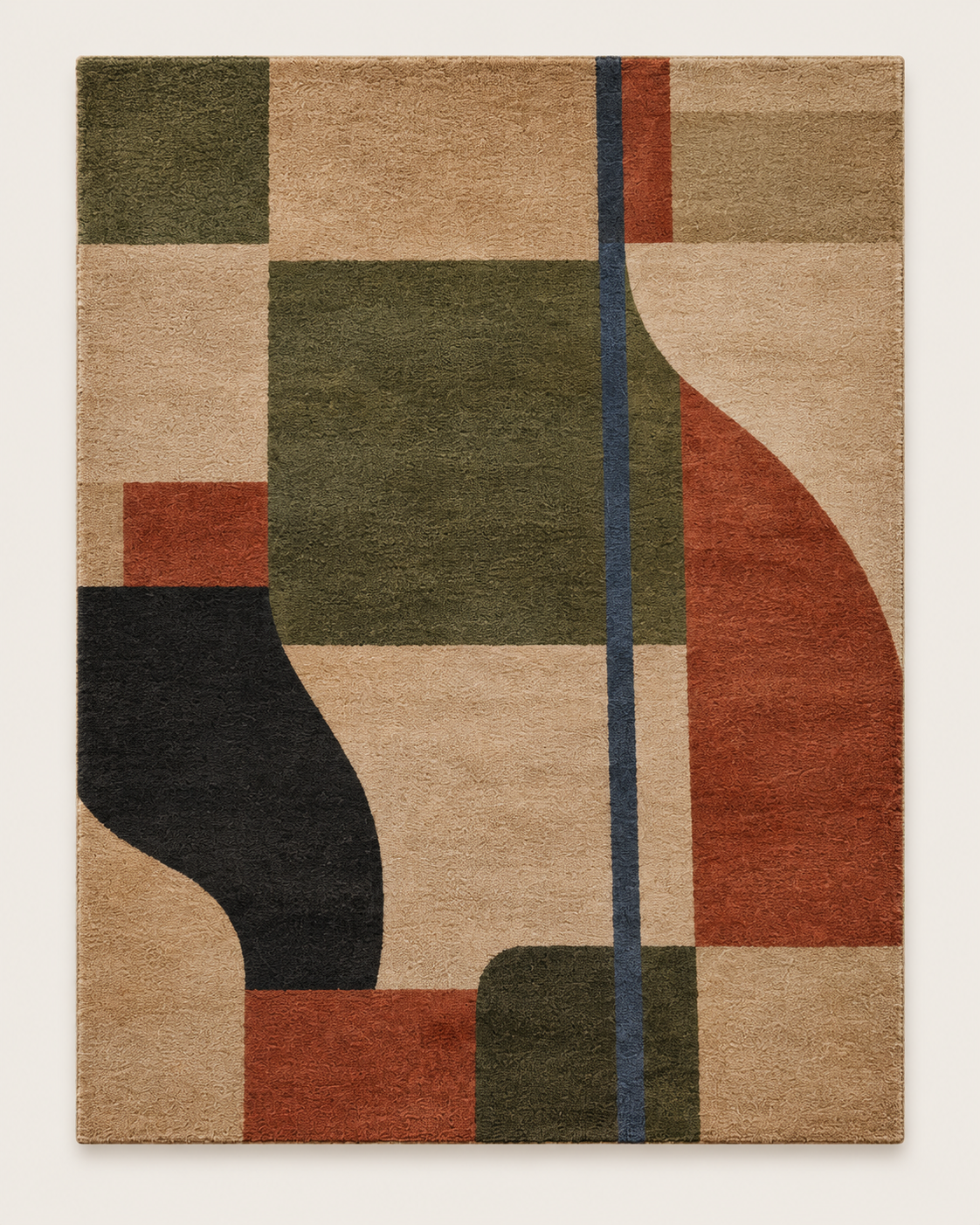
Brazilian Modernism
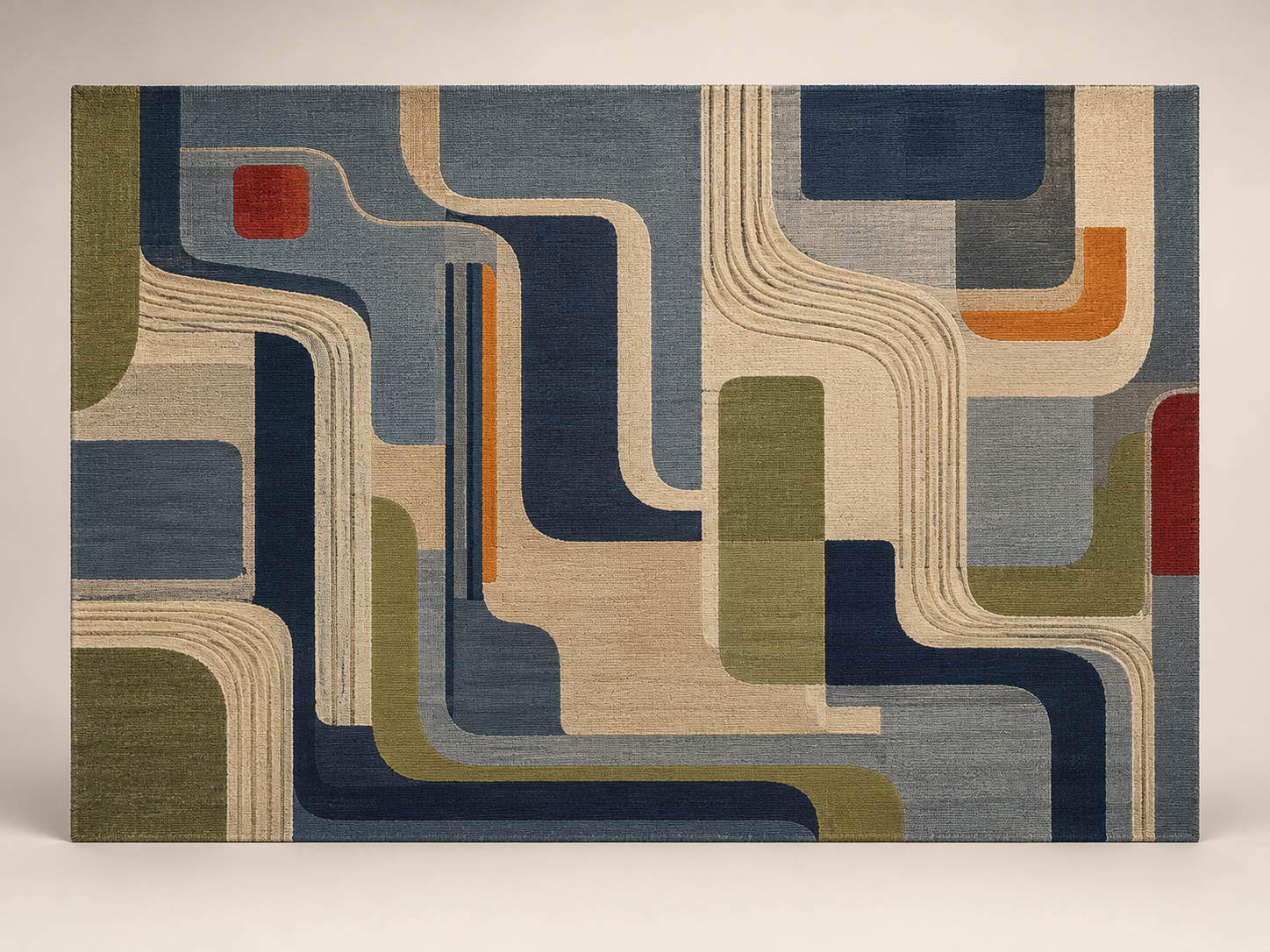
Composition
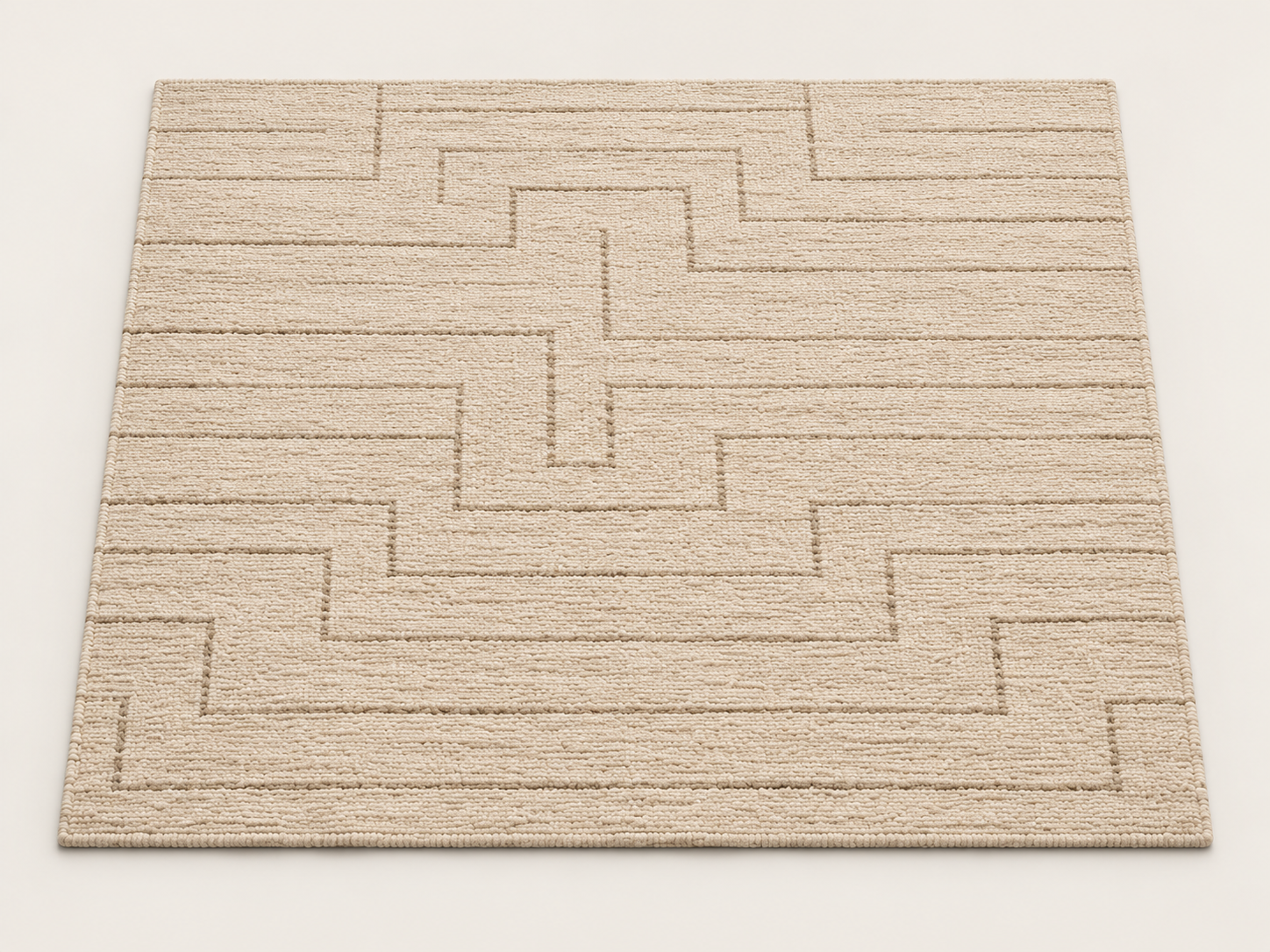
The Maze
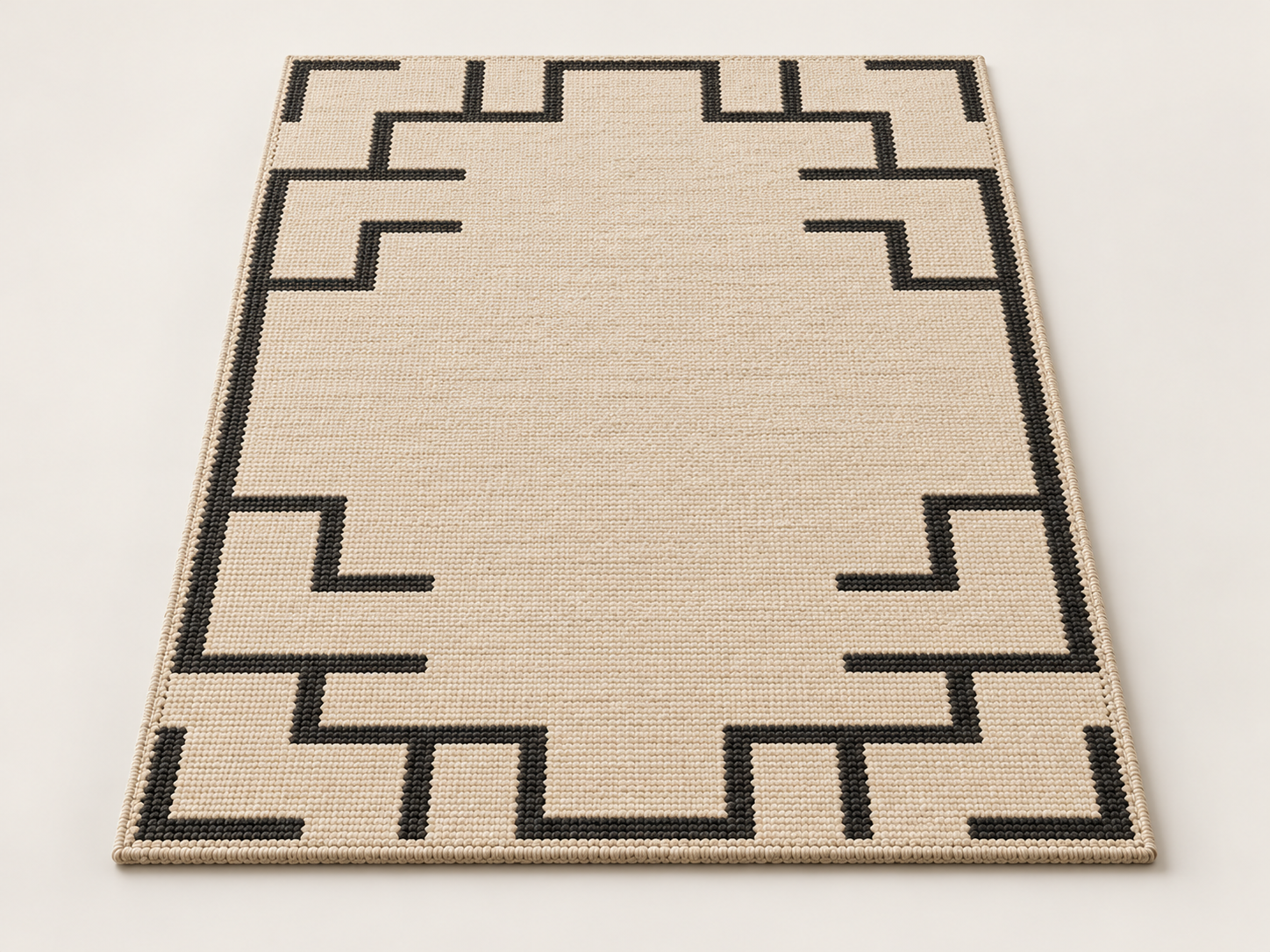
Architectural Border